
What Happens If Someone Refuses to Be Served in Texas?
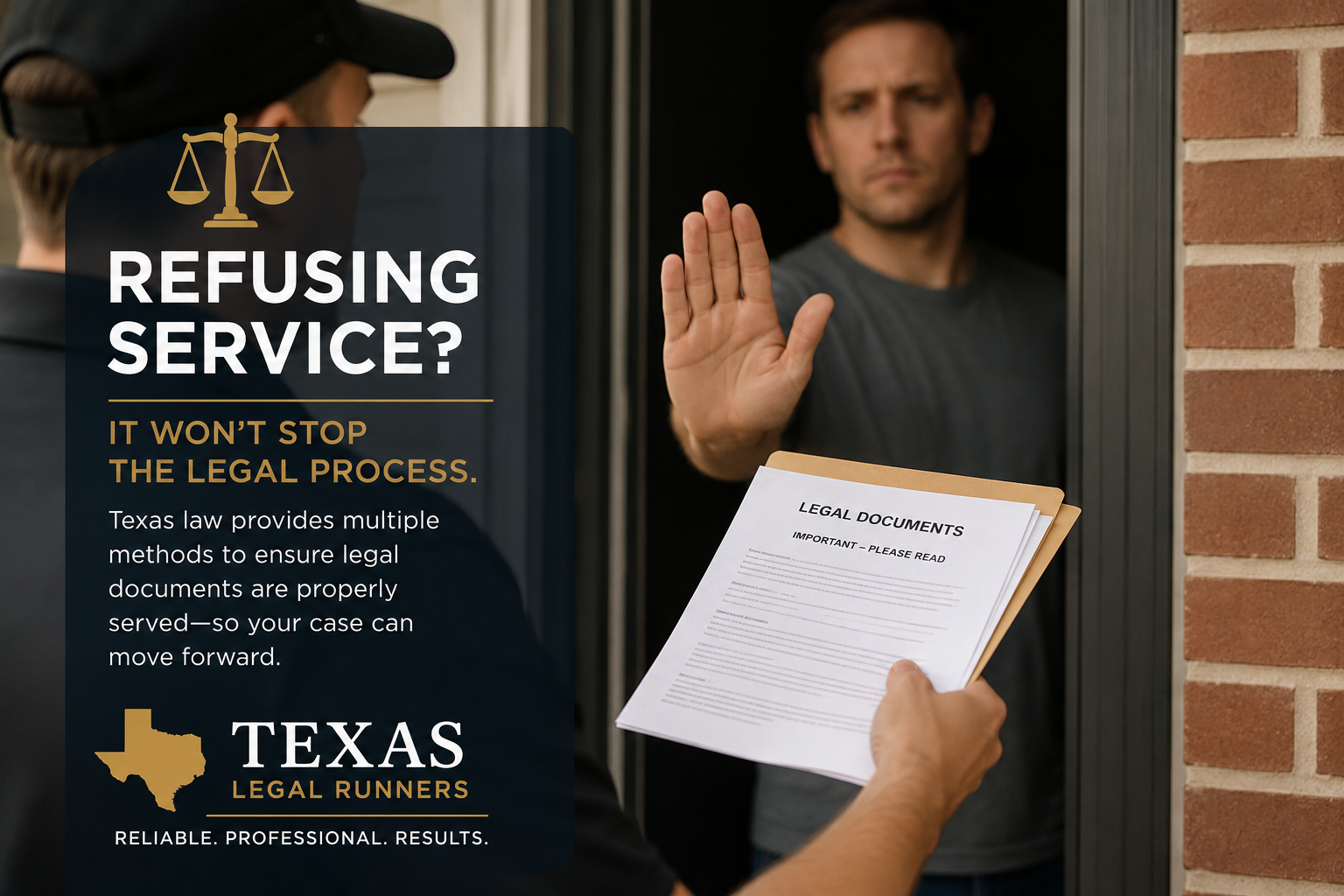
What Happens If Someone Refuses to Be Served in Texas?
When someone learns they are about to receive legal papers, it's not uncommon for them to think that refusing to accept the documents will prevent a lawsuit from moving forward. In reality, refusing service rarely stops the legal process. Texas law provides several methods for serving legal documents, and avoiding or refusing service is usually only a temporary delay—not a permanent solution.
Whether you're an attorney, business owner, landlord, or individual involved in a legal matter, understanding how service of process works can help you avoid unnecessary delays and ensure your case moves forward.
Can You Refuse to Be Served?
The short answer is no.
A person cannot simply refuse service and expect a legal case to disappear. In Texas, a process server's responsibility is to notify a defendant that legal action has been initiated against them. Once service has been completed according to the Texas Rules of Civil Procedure, the case can proceed regardless of whether the recipient wanted to accept the papers.
Many people mistakenly believe that refusing to take the documents, closing the door, or walking away prevents service. In most situations, that is simply not true.
What Counts as Refusing Service?
Refusing service may include situations where someone:
- Refuses to open the door after identifying the process server.
- States they will not accept the documents.
- Walks away when approached.
- Attempts to avoid contact after recognizing the process server.
- Has family members claim they are not home when evidence suggests otherwise.
Experienced process servers are trained to document these encounters carefully. Detailed notes about dates, times, locations, and the recipient's behavior may become important if additional legal action is needed to complete service.
Can a Process Server Leave the Papers?
Depending on the circumstances, yes.
Texas law recognizes several methods of service. In some situations, if the intended recipient clearly identifies themselves and intentionally refuses to accept the documents, the process server may still complete service by leaving the papers in the person's presence after informing them of the nature of the documents.
Each case is unique, and process servers must comply with court rules and any specific instructions contained in the court order.
What If Someone Keeps Avoiding Service?
Some individuals make repeated efforts to avoid being served by:
- Ignoring the doorbell.
- Changing their daily routine.
- Leaving through another exit.
- Having others answer the door.
- Moving without providing a forwarding address.
When traditional attempts are unsuccessful, attorneys may ask the court for permission to use substituted service.
What Is Substituted Service?
Substituted service allows service to be completed using a different method when personal delivery has proven unsuccessful despite diligent efforts.
Depending on the court's authorization, substituted service may include:
- Leaving the documents with another qualified person at the residence or workplace.
- Posting the documents in an approved manner.
- Serving through another method specifically authorized by the court.
Before substituted service is approved, the court generally requires evidence showing that reasonable attempts were made to personally serve the individual.
Why Professional Process Servers Matter
Successfully serving evasive individuals requires experience, patience, and knowledge of Texas law. Professional process servers know how to:
- Conduct multiple service attempts at different times of day.
- Document every attempt thoroughly.
- Maintain professionalism during difficult encounters.
- Coordinate with attorneys regarding alternative service options.
- Help keep legal matters moving efficiently.
Choosing an experienced process server can reduce delays, avoid procedural mistakes, and improve the likelihood of successful service.
Frequently Asked Questions
Does refusing service stop a lawsuit?
No. Refusing to accept legal documents does not automatically stop or dismiss a lawsuit. Courts have procedures to address individuals who avoid or refuse service.
Can someone be arrested for refusing service?
Generally, no. Being served with civil legal papers is not a criminal matter. However, refusing service will not prevent the legal process from continuing.
How many times will a process server try to serve someone?
The number of attempts varies depending on the circumstances, client instructions, and court requirements. Professional process servers often make multiple attempts at different times and days before recommending alternative service.
What if the person has moved?
If the recipient has relocated, skip tracing and investigative techniques may help locate a current address so service can be completed.
Trust Texas Legal Runners for Reliable Process Serving
At Texas Legal Runners, we understand that every case is important. Whether you're serving divorce papers, subpoenas, citations, eviction notices, or other legal documents, our experienced team provides prompt, professional, and dependable process serving throughout Beaumont and Southeast Texas.
We also offer skip tracing, court filing, and legal courier services to help attorneys, businesses, and individuals navigate the legal process efficiently.
If you need fast, reliable service of process, contact Texas Legal Runners today. We're committed to helping you move your case forward with professionalism, accuracy, and respect for the law.